American Hometown Services, Inc. -- commercial and residential services in Quincy, IL and Hannibal, MO American Hometown Service Inc is a BBB Accredited Business. Click for the BBB Business Review of this Janitor Service in Quincy IL

Residential, Commercial, and Industrial Cleaning
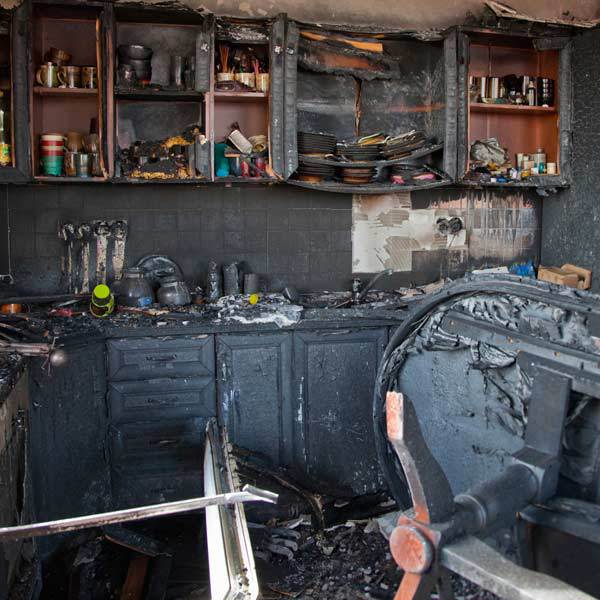
Building Maintenance, Water & Fire Damage Restoration
, Mold Removal

1405 North 12th Street
Quincy, IL 62301
217-228-7563 or
1-866-297-7563
Or email us!

Serving Illinois,
Iowa, and Missouri

Fully insured and bonded

Home  ::  About Us  :: Water & Fire Damage Restoration  ::  Wooden Floor Repair  ::  Resource Links

Building Maintenance Pics :: Mold Basics :: Carpet Cleaning: The Process -  Commercial  - Residential FAQ

Water & Fire damage restoration
serving Illinois, Missouri, and Iowa


[For information on Fire Damage Restoration]
Click here


Water Damage Restoration

Nature of Water Damage

Water damage can be as (or more) destructive and insidious than fire and smoke damage. While it often leaves less visible reminders of its occurrence than fire and smoke, water damage occurs more frequently and the damage keeps getting progressively worse until corrective action is taken.

Damage from water is often characterized in two categories: PRIMARY damage and SECONDARY damage. Water is known as the "universal solvent" because more substances and materials are dissolved by water than by any other liquid.

  • When water in liquid form dissolves a material or causes damage, this is commonly referred to as "Primary Water Damage". A gallon of water weighs 8.34 pounds. In volume a cubic foot of water = 7.48 gallons. Water in vapor form is also destructive.
  • The damage caused by water vapor is known as "Secondary Water Damage", such as wooden cabinets, documents, fine arts, etc. which absorb water and vapor and swell. Secondary water damage is migratory, and can extend far beyond the areas of water intrusion. If corrective action is not taken, within 48-72 hours in most situations, irreversible damage can occurs which can raise the restoration ante substantially.


Source and Category of the Water

Category Type I - "Clean" Water - a "clean" or potable water source is one that does not pose substantial harm to humans. Broken water supply lines, tub or sink overflows with no contaminates, melting ice or snow, and falling rainwater.


Category Type II - "Gray" Water
- Potentially contains some degree of contamination that may cause sickness or discomfort if consumed by humans. The term gray water is a classification term only and may not refer to the color of the water. Includes buy not limited to: discharges from dishwashers and washing machines, toilet overflows with urine (no feces), broken aquariums, and punctured water bed mattresses. This type of water may contain algaecides and bio-contaminates (fungal, bacterial, viral, algae). Time and temperature accelerate the bio activity of "gray" water significantly. Flooded "gray" water in structures that remains untreated for longer than 48 hours may change from a "gray" water condition to a "black" water condition.


Category Type III - "Black" Water - may contain pathogenic agents (capable of causing disease), which can adversely affect occupant health and workers. Includes all flooding from sea water, rising water from rivers and streams, ground surface water, and toilet back flows that originate from beyond the toilet trap. "Black" water may contain fecal contamination, pesticides, heavy metals, radioactive materials, or other organic substances. The term black water is a classification term only and may not refer to the color of the water.


Time Related Factors

Water damage is like a stop watch, once started, time quickly elapses. The longer the restoration efforts take to remediate the water damage condition, the greater potential loss.


Structure

  • Hardwood swelling and warping - All wood is hygroscopic. This means it will take on moisture and release moisture depending on its surroundings. When the material takes on moisture, it will expand. When it releases moisture it will shrink.

  • Tile floors - Ceramic, marble, and vinyl tile floors can be wet, however consideration must be made immediately regarding the type of water and exposure time.

  • Floating floor systems 0 Do not fare well in flood situations. Water becomes trapped below the floor system in the underlayment that is comprised of foam and plastics.

  • Drywall/sheetrock - Loses its dimensional stability when wet. Sheetrock ceiling are affected much more than sheetrock walls.

  • Plaster - Wet plaster although a durable cementitious building material drying it following water damage can be challenging and time consuming. Wet plaster with layers of paint requires an aggressive and immediate drying plan, such as perforating paint layers and drilling ventilation holes.

  • Painted surfaces - Any layer of paint is considered a moisture barrier. The greater the numbers of paint layers, the thicker the moisture barrier.

  • Paper/Vinyl wall coverings - Detaches from sheetrock or plaster surface and provides a breeding ground for microorganisms between the wall surface and the back of the covering.

  • Custom molding and trim - Swells and warps. Some finishes may become damaged while in contact with water. The presence of molding and trim acts as a moisture retarding barrier and slows down drying of stud bay cavities and wet building assemblies.

  • Insulation - Cellulose insulation, which becomes damp or wet, will lose its flame resistive and antimicrobial properties. Fiberglass and styrofoam insulations are salvageable most of the time. All must be inspected for mold damage.

  • Corrosion - Depending upon the type of metal, corrosion may be unavoidable.

Contents

  • Stains and watermarks - Most wood furniture is stained as part of the finishing process. When wetted with water, this stain may become water-soluble and transfer to finish materials and in most cases, the stain transfer will be permanent.

  • Swelling - The amount of moisture a given piece of finished wood takes on and the speed at which it absorbs moisture depends on many factors. The effect of extreme humidity on hardwood furniture may cause swelling as the moisture content increases.

  • Corrosion - Most contents with metallic hinges, handles, etc. are not designed to withstand high humidity conditions.

  • Rugs - Depending on their construction, high value area rugs that are saturated with water may or may not respond well to being wet then dried. Some carpets contain dyes that migrate when wet into lighter colored areas.

  • Books/Paper Documents - Books and papers that are saturated with clean water and discovered within 24 hours should be frozen or dried within 48 hours. Paper is highly vulnerable to water damage and microbial growth.

  • Miscellaneous - Most water loss situations regardless of the category can be processed quickly.


Carpet Damage

The most accessible inspection point is generally a corner. When tackless stripping is wet for an extended period of time the tacks will show visible signs of rust. Moisture damage to tackless strips is very obvious by the rust deposits and darkened appearance of the wood laminate used as the tackless strip body.


Padding/Carpet Cushion

Probably the most frequently asked question on a water damage job with wall to wall carpet installation is: "Should we save or replace the carpet padding?"

If the padding is horsehair, jute or composition types consisting of any natural fibers, consider replacement for the following reasons:

  • Natural fibers become dimensionally and structurally unstable when wet.

  • Natural fibers frequently contain dyes which when wet are released into face fibers.

  • Natural fibers require extended drying time and are non-cost effective.

  • Natural wet padding fibers can support feeding grounds for bacteria, mold and mildew.

If the padding is of a synthetic composition or of blends of natural and synthetic foam, it is salvageable much of the time.

Synthetic pads are found in a wide variety of shapes, weights, thickness, and costs. They are all fundamentally made of foam, sponge rubber or polyurethane material ranging from highly porous to highly nonporous.


Ceiling and Wall Assemblies

Unless there was a high water situation or the water damage was left untreated for a significant amount of time, the drywall, base molding and tackless strip are usually salvageable. Blowing air into wall cavities primarily help dry them by increasing the rate of evaporation.


When blown-type insulation becomes wet it has a tendency to lose its "R" value. Insulation comes in a variety of forms. Fiberglass, polystyrene, rock wool, and recycled shredded newspaper. The form as to which the insulation is presented to the structure has a strong influence upon the salvage odds. Synthetic materials subjected to wet secondary moisture will dry in clean water situations. Fiberglass insulation is available with and without a vapor barrier facing. Fiberglass insulation with a vapor barrier may retard or prevent rapid drying within building assemblies.


Unless there was a high water situation or the water damage was left untreated for a significant amount of time, sheetrock, exposed to clean water, is often salvageable.


Sheetrock is a sturdy building material made of gypsum and paper. Sheetrock is one structural material that becomes more fragile when wet, and more stable as it dries. Vertically installed sheetrock is affected by water differently than that of overhead horizontal types. Sheetrock installed at ceiling areas are more vulnerable to water pools and sagging.


Hardwoods/Softwoods

Water and wood is a troublesome combination. The amount of moisture a given piece of wood takes on and the speed which it absorbs moisture depends on many factors:

  • wood species

  • age

  • oil

  • resin

  • cut

  • method used for drying

  • previous water damage

  • surrounding vapor pressure

  • temperature of moisture

  • existing moisture content

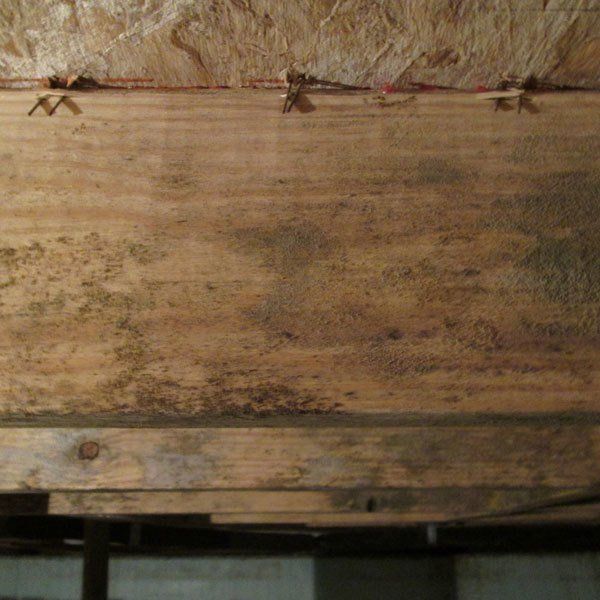
If the carpet installation has been made over a hardwood surface such as strips, planks or parquet, and the water has been there a while you may encounter buckled and warped flooring. In this case, removal of the carpet and pad is required to provide access for complete inspection and repair replacement of affected hardwood areas. Fungal damage may occur in some wood materials when the moisture content exceeds 20%.


Plywood sub-floors are generally resistant to water damage because of the manner in which it is constructed, the nature of the materials from which it is constructed of and the types of adhesive used. Particle board used as both structural components and furniture irreversibly swells when exposed to moisture and often requires removal and replacement.


If the carpet installation has been made over a hardwood surface, planks, strips or parquet, and the water has been exposed to them for an extended time, you may encounter warped or cupped conditions.


Generally, hygroscopic materials change physically as they absorb water by swelling. Hardwood furniture in an extremely humid building for example, may swell as the moisture content increases.


Cupping and Crowning

"Cupping and crowning" are common conditions resulting from water damage. Both problems occur across the width of the flooring material. Cupping is when the edges of a board are high and the center is lower. It can occur after water spills onto the floor and is absorbed by the wood, but high humidity is more often the cause.

If the floor is sanded before the boards have had a chance to thoroughly dray and flatten out on their own, the top surface will initially be flat, while the bottoms of the board remain cupped. Crowning occurs when the bottoms of the boards eventually dry and flatten out, leaving the top of the boards with a convex profile.


Laminate and Vinyl Floors

When a quantity of moisture seeps underneath melamine laminated wood flooring material the floor should be replaced due to the nature of construction. Swollen particle board under a vinyl floor normally should be replaced with new sub-flooring material.


Concrete Floors

When flooded with water, concrete floors can increase in moisture content. Concrete floors expand and contract with temperature changes, not changes in moisture content.


Vinyl Wall Covering

Vinyl acts as a moisture barrier and will prevent the evaporation of moisture from the base wall material. Furthermore wall covering adhesive is made from wheat and is very vulnerable to mold. Moisture barriers can be helpful and harmful in wet climates. Moisture evaporating within the structure can migrate silently and invisibly. Moisture as a vapor can only be detected by sensitive moisture metering devices.


Vapor barriers play an important role in drying structures internally. A vapor retarding material like vinyl wall covering is considered a non-permeable wall surface membrane. Vapor retarding materials can be used as a positive means to protect homes from outdoor atmospheric moisture.


Mold Potential in Wall Cavities

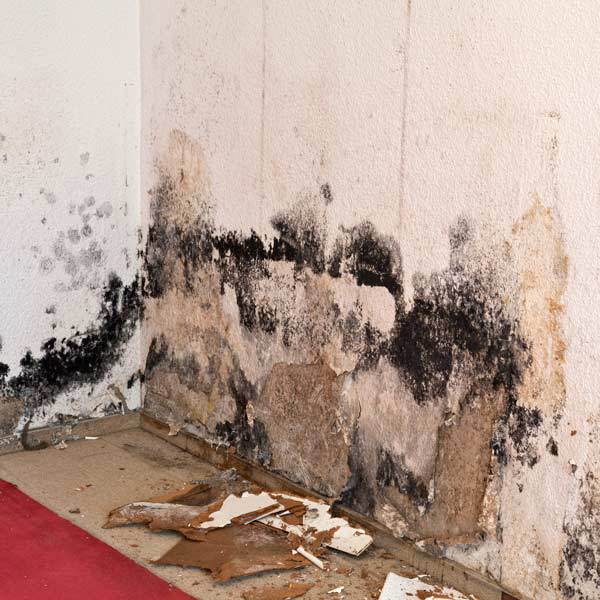
Interior wall cavities offer an ideal area for growth of mold and mildew. Mold spores inside the wall cavity are a fungal time-bomb ready to explode. The interior of the wall cavity is dark and lacks air circulation. The cavity also contains abundant food sources in the form of wood and cardboard coating on drywall. Moisture from the water loss, and comfortable temperature fulfill the basic requirements for mildew and mold growth.


Spores are often very tiny. A period in this text is about 100 microns in diameter. Wet drywall may become covered with millions of spores per square inc in only a week or two if conditions are optimal. Common molds, such as Penicillium and Aspergillus species make spores that are less than 5 microns in diameter. Particles this small may take an hour to fall one meter. Moldy material will emit spores on an irregular basis. Thriving mold colonies also generate odors, but a space can be full of spores, yet have no discernible moldy smell. On the other hand, musty odors do not necessarily indicate heaving concentration of spores.


Once established, mold colonies can be very durable. When conditions for growth become less than optimal, the colony will produce a last crop of spores, then go dormant. This period of dormancy can last for years. When optimal moisture and temperature conditions return, the colony can come out of dormancy and begin to amplify. The growth period will last as long as food, moisture and warmth are present. Most residual odor problems after water damage situations are related to incomplete drying.


How Wet for How Long?

Water Damage Health Considerations

  • Legionnaire's disease

  • Fecal strep

  • Salmonella

  • Gastrointestinal diseases

  • Aspergillosis

  • System fungal infections


Microbiology

Introduction To Microbiology

Indoor and outdoor environments naturally harbor a great variety of microscopic life forms termed microorganisms or microbes. These microbes are found everywhere in nature and are primarily bacteria and fungi (yeast and molds) that are introduced into the indoor environment from outdoors or from materials brought indoors. Once indoors, these biological agents interact with the inanimate environment by setting in or on a variety of surfaces or materials as dusts. These collecting places or reservoirs include carpet, upholstered furniture, wood, and carious painted surfaces such as walls, ceilings, and window sills, as well as many common yet controlled damp areas such as shower curtains, cabinet areas located under sinks, and air conditioning components.


If conditions are such that moisture is limited, then these microbes have a stable relationship or ecology with the built environment. However, when moisture accumulated more rapidly than the natural drying process, such as with chronic plumbing leaks or sudden flooding from rainwater or sewage backflow, the ecology changes and favors the rapid reproduction or amplification of bacteria and fungi that can have a detrimental effect upon human health and materials. If water evaporates too quickly into warm interior air without a corresponding humidity reduction, the result can damage hygroscopic materials, reduce the rate of drying and increase the potential for fungal growth.


If a water damaged environment is not promptly and properly restored, many environmental microbes, such as odor causing (e.g. Actinimycetes), and fungi (e.g. Aspergilus and Penicilium molds) will colonize, grow, and amplify on building materials, eventually contaminating the indoor air and creating health risks for those who live and/or work here.


Water Activity And Microorganisms

Microorganisms can grow in moisture films on a variety of surfaces and within porous materials. The amount of free water available to them for growth on a substrate such as wall board, carpet, ceiling tile, etc., is described as water activity. A reading of 80% RH taken at the surface would equate to a water activity of 0.8.


Most bacteria have a >0.95 water activity minimum requirement for growth and many molds a minimum requirement of water activity of >0.88. However, most molds that appear in the early stages of the water damaged environment require a water activity of 0.66- 0.70 to grow. These dry tolerant (or xerophilic) molds include species of Penicillium and Aspergillus that may produce potential allergens and toxic substances. Very wet environments, particularly those with cellulose-based materials (such as wallpaper, drywall, books, cardboard), favor the growth of molds such as Stachybotrys, Ulocladium, and Chaetomium.


In addition to visible bacterial or fungal growth and detection of moisture in porous materials, an obvious indicator of microbial growth and contamination is a “musty”, “moldy”, or “mildewy” odor. Bacteria and fungi produce a variety of volatile organic compounds (VOCs) during active growth. The microbial volatile organic compounds (MVOCs) we detect through our olfactory senses are generated by many molds, and also actinomycetes bacteria, such as Streptomyces and related organisms.


Bacteria

Bacteria are one-celled microorganisms that lack the green pigment chlorophyll. Four hundred million (400,000,000) of these cells are the same size as a single grain of granulated sugar. Bacteria reproduce by dividing in half (fission) to produce two identical cells. Under ideal conditions, bacteria can reproduce every 15-30 minutes, one bacterium could become 70 billion bacteria in only 12 hours.


Some bacteria produce poisonous substances (toxins) that can cause disease, such as lockjaw, or food poisoning in humans. Other bacteria produce enzymes that can dissolve or destroy living cells or commercial goods, foul surfaces that we contact daily, contaminate equipment and foodstuffs.


Bacteria are classified into two general groups based upon a laboratory technique called gram staining.


Those bacteria that accept violet stains are classified as: Gram Positive. Examples of these are (Staphylococcus aureus) which causes acne, and (Clostridium tetani) which causes tetanus.


Those bacteria which do not accept the violet stain but accept a counter stain are classified as: Gram Negative. Examples of these are (Pseudomonas aeruginosa) which breaks down and contaminates both living and non living matter, (Salmonella typhosa) which causes typhus and (Escherichia coli) a bacteria normally present in the human fecal matter which causes diarrhea.


In addition to their staining characteristics, bacteria may be classified by their shape of form. All the thousands of species of bacteria fall into three categories:

Spherical (round) – cells are called COCCI

Rod-shaped – some of the rod-shaped bacteria form a spore within a cell. The spore may develop later into a new cell. Spores are extremely resistant to heat, chemicals, and drying while the cells which form spores are no more resistant to those conditions than other bacteria. While some spores can withstand boiling for days, vegetative spores may be killed in minutes. Not all bacteria produce spores, some bacteria reproduce only by fission. Spiral (screw shaped) – this group includes some bacteria which are enclosed in capsule which may protect them from antimicrobial agents.


Fungi

Fungi are a large group of non-green plants that live by feeding on either living or dead organisms. Microorganisms that derive their nourishment primarily from decaying organic materials are considered to be saprophytic. Fungi cannot make their own food because they lack the green plan pigment, chlorophyll. Some fungi such as yeast occur as single cells that require a microscope to see. Others, such as a mushroom are large. Over 100,000 species of fungi have been identified. Fungi and bacteria often live together in wet environments and in nature.


Many fungi are useful. They are necessary in the making of bread, wine, cheese and beer. Mushrooms are used as a food source. Other fungi are troublesome causing decay and mildew. Fungi will grow on a wide variety of both natural and synthetic substances.


Molds are not plants or animals. They belong to the kingdom of Fungi. Molds digest their surrounding environment. They secrete digestive agents called “enzymes”, which break down the environment into digestive pieces, which are reabsorbed. Molds cannot feed on dry material; they require water in order to be chemically active. The more the mold eats, the more it grows. Mold colonies can only thrive on damp materials but can however extend short distances through dry materials probing for moisture and food sources.


Mold growth is slow at first, starting from a single spore or clump of spores. As the colony grows, it extends fine feeding tubes called hyphae into its food source. These tiny hairlike shapes can penetrate apparently solid material. Such as cement and gypsum board core. The interconnected mass of hyphae is called the mycelium. When the colony is mature, it begins producing spores, which can then spread, by air movement or mechanical disturbance. Wet drywall/sheetrock may become covered with millions of spores per square inch in only a week or two if damp conditions persist. The best way to reduce or retard their growth after being subjected to water damage is to ensure that all materials are dried rapidly. To speed up structural drying, gypsum board (drywall) ceilings that are completely saturated and sagging should be removed and discarded.


Fungi reproduce by several methods. Some reproduce from cellular fragments of the organisms. Others produce spores, which function like seeds of more sophisticated plants.


The spores of fungi are not as resistant to chemicals, heat or dying as the spores of bacteria. Once established, mold colonies can thrive or go dormant depending upon food, moisture and warmth. Colony dormancy can last for years.


Fungi cause disease in humans. Coccidiosis and histoplasmosis are fungal diseases caused by inhaled spores that infect the lungs and other internal organs. Athletes' foot and ringworm are infections of the skin and nails caused by fungi. The chemical compounds released by molds in order to protect themselves from other microorganisms are known as mycotoxins.


Algae

Algae are similar to the fungi, except they contain chlorophyll and other pigments. Algae range in size from singular celled microscopic organisms to 200 feet long seaweed. Algae live in fresh water, saltwater and on land. Algae are classified by color: blue-green, brown, red and green.


Algae may appear on water as patches of green referred to as “pond scum”. On trunks of trees or on soil they appear green or blue. At the seashore green, red, and brown seaweed may be found. Algae are the basis of the food chain which makes aquatic life possible. Algae is useful as human food and has industrial uses. In many cases algae is troublesome. For example, the may:

-Impart disagreeable taste or odor to drinking water

-Cause bathers to itch, poison fish

-Clog water filtering equipment and cooling towers

-Interfere with pulp mill operations

-Foul underwater structures

When water temperature and nutrients reach favorable level, certain algae multiply rapidly. “Algae bloom or pond scum” may seriously effect other aquatic life and water quality. Large accumulations of algae in shallow fish ponds and lakes deplete the oxygen and causes fish kills. Unlike bacteria, viruses, and fungi, algae have little direct medical importance to man.


Slime

Slimes are combinations of fungi, bacteria, algae, and other organisms. Slimes can be troublesome in any water systems, including industrial water cooling towers and in paper mill wet end systems, drip/condensate pans, etc.


Viruses

Viruses are parasites which only live and reproduce inside the cells of an living host. Viruses are 1,000 times smaller than bacteria, and may be viewed only with and electron microscope. Viruses enter living plant or animal cells and reproduce within that cell, often destroying the host cell. Viruses must continually enter new cells to survive. Viruses have no mechanism for transportation. Viruses depend on the air, water, insects, animals or humans to carry them from one host to another. Some viruses may survive away from the host for many hours or days, when in a nutrient laden environment such as blood, dead skin tissue, and body wastes.


Some of the diseases caused by viruses are smallpox, influenza, rabies, measles, mumps, polio, hepatitis, H.I.V. (AIDS) and common cold. Parvo, canine distemper, and foot and mouth disease are viral diseases that affect animals. Viruses cause plant diseases affecting such crops as tobacco, vegetables, fruits, and sugarcane.


Practical Use of Disinfectants/Antimicrobials in Water Damage Restoration


Hard and Soft Surfaces

The materials which get wet in a water damage situation generally fall into two categories: hard and soft surfaces.


Soft surfaces would be carpet, drapes, upholstered furniture, bedding, etc. Although hard to the touch , sheetrock is a hard porous surface, able to wick contaminated water into itself rendering it very difficult to disinfect. Some wooden building assemblies fall in this category as well. In situations where these materials come in contact with Category III water, removal and replacement is highly recommended. It is the opinion of the Environmental Protection Agency (EPA), that due to the density and porosity of soft surfaces, it is difficult if not impossible to disinfect them. The highest level of product certification the EPA is willing to grant on product utilized for antimicrobial treatments to soft surfaces is bacteriostat or santizer. Bacteriostat is a chemical agent that prevents or inhibits the growth of bacteria but does not necessarily kill them. A sanitizer lowers microbial counts to safe levels.


Conversely, surfaces such as cement, metals, plastic, etc. Would be considered hard surfaces. The floors, walls, fixtures in a typical washroom would be considered hard surfaces.


Biocides

Most biocides in the United States are regulated by the Environmental Protection Agency (EPA). A government registration number is assigned to each product. This number is confirmation that the product has been tested and evaluated for efficacy and safety exactly as the manufacture makes claims to. Furthermore, government laws regulate the application of biocides.


The risks arising from violating these laws or regulations may include adverse public health impact, personal injury, property damage, customer fraud, and exposure to civil penalties and criminal prosecution. Some governmental agencies may require applicators of biocides, particularly restricted use pesticides, to obtain licenses or applicator certification.

Water Damage Restoration Specialist for Residential and Commercial Properties!


Commercial:

Office Building Flooding
House Flooding
Basement Flooding
Sump-Pump Back Up
Septic & Sewer Cleanup


Residential:

Wet Carpet, Pad and Furniture Removal
Mold & Mildew Treatment
Complete Renovation from Start to Finish


Call the professionals at (217) 228-5763 or 866-297-7563


Ask about our lifetime
warrenty on mold and
mildew treatment!

American Hometown Services in Quincy, IL removes and restores mold in basements and walls

© 2012 American Hometown Services

html counters
Web Site Stats